
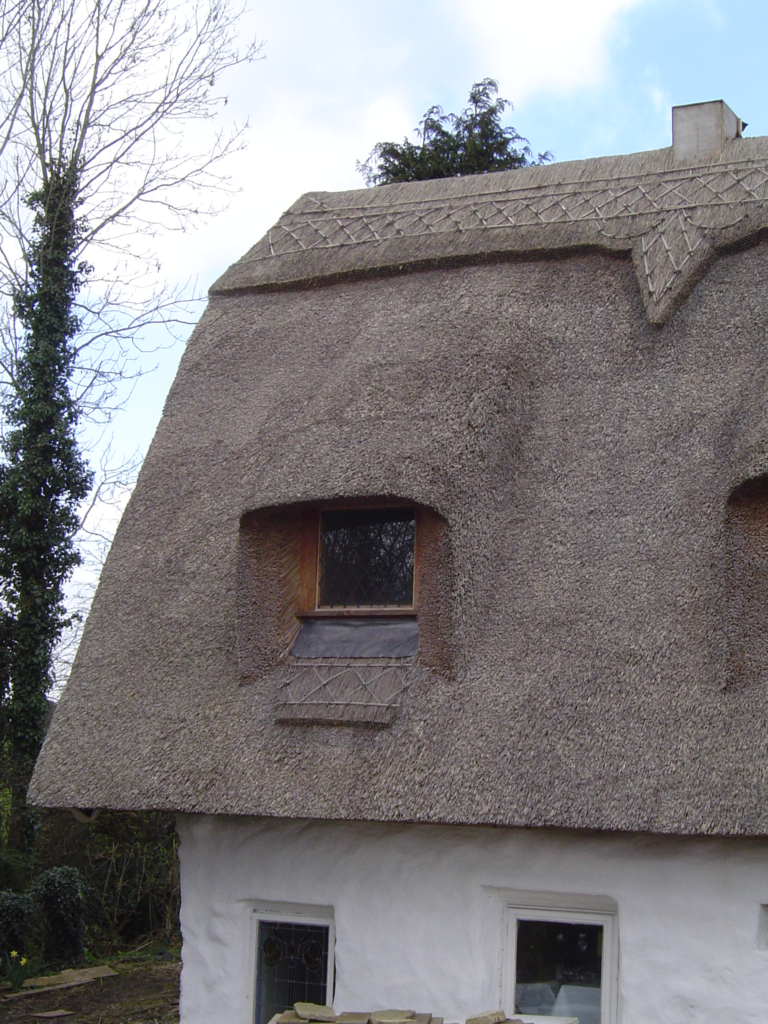
The coat of a thatched roof can look broadly similar from the road. The ridge usually does not. Across Ireland the finish at the apex changes with the county, the material, and the thatcher. Some are plain. Some are far more intricate. All of them are a skill in their own right, and none of them come easy.
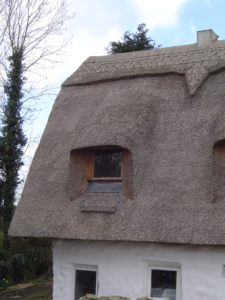
A flush, or plain, ridge follows the pitch of the roof. On straw, a layer is bent or wrapped over the apex and held with stretchers on both sides. On water reed, the butts are brought together along the apex and pinned. It sits quiet on the building. On a great many old cottages this is the finish that was always there, and it is the one that belongs there still.
A bobbin ridge is different work. A handful of long straw is twisted at the centre, folded, and given an eye so it can be strung on a scollop. Those bobbins are fixed along one or both sides of the ridge, and the free ends are pinned down. This was a widespread finish in Leinster — Meath, Dublin, Kildare, Offaly, Carlow and Wicklow all had it — and it turns up across the midlands in older photographs. It is rarely recorded in Ulster. A bobbin ridge is not a pattern cut into a block. It is straw work, made rather than sheared, and it takes a clean handful and a practised twist to keep the line even.
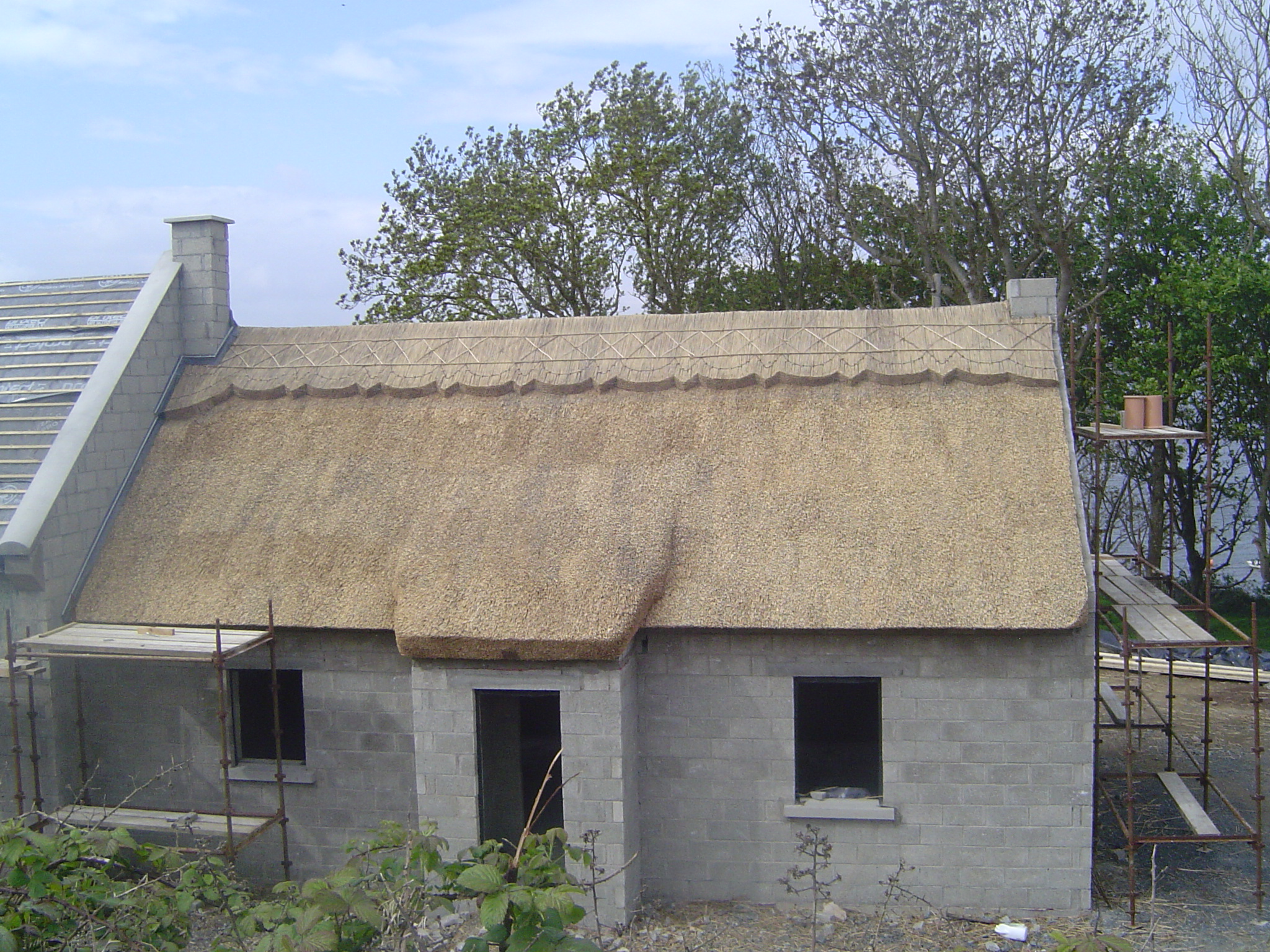
A block ridge is built up above the coat, often with a cut skirt or a scalloped edge. It stands out, and in wet Irish weather a well-made block can shed water very well. It is also the finish most often argued over. On many vernacular cottages it was never the local method. Conservation guidance treats it as a later import, and on a listed building it is often refused unless the roof already has a long precedent for one. A block ridge can be the right choice on one building and the wrong choice on the next. The pattern, the height and the cut all have to suit the house, not just the thatcher’s habit.
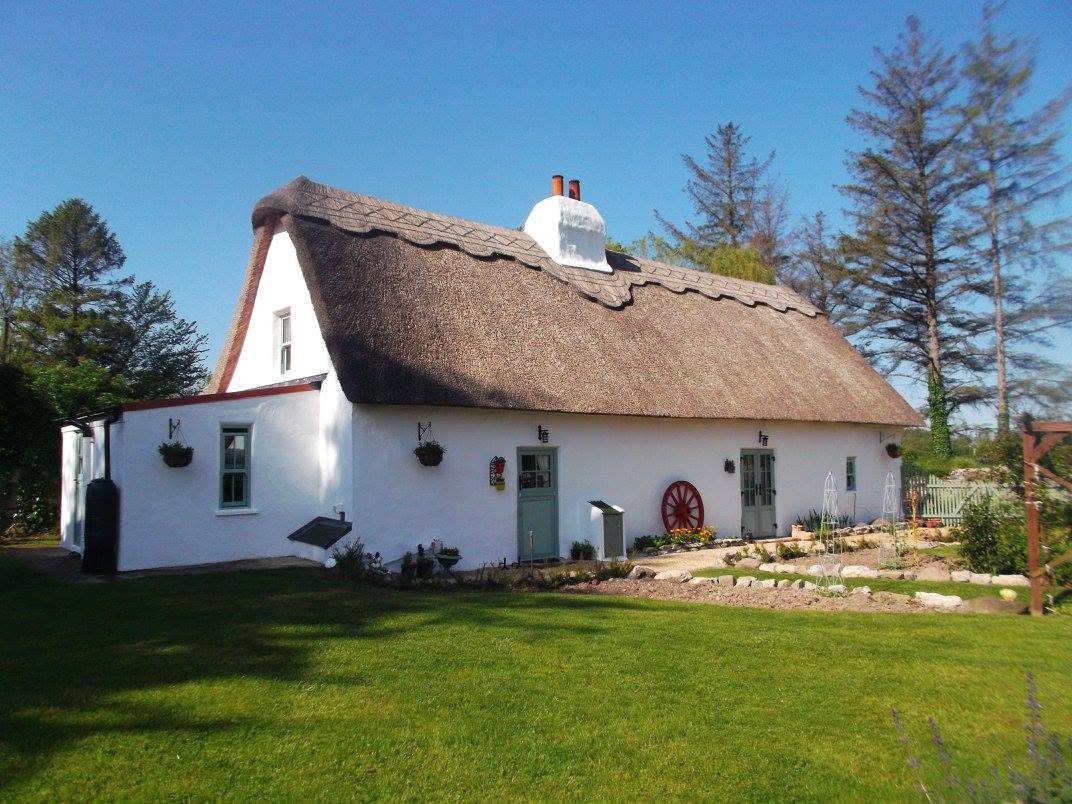
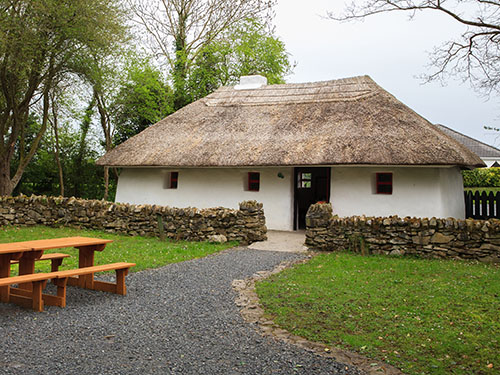
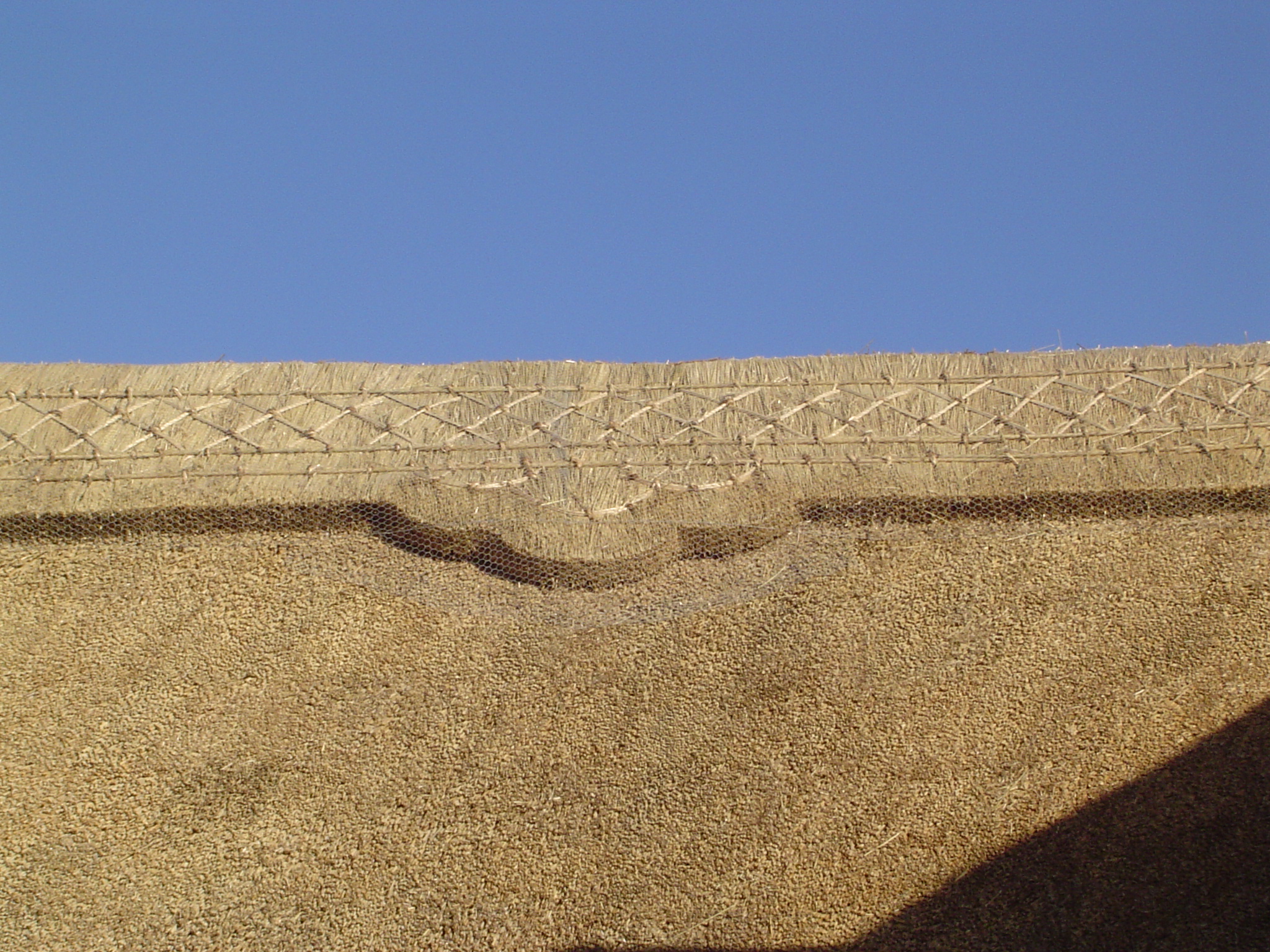
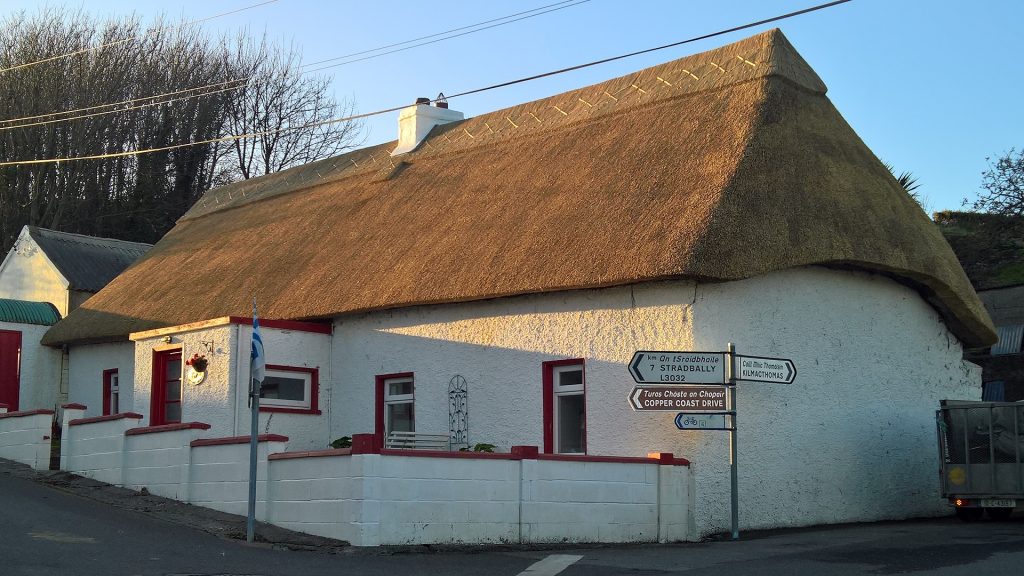
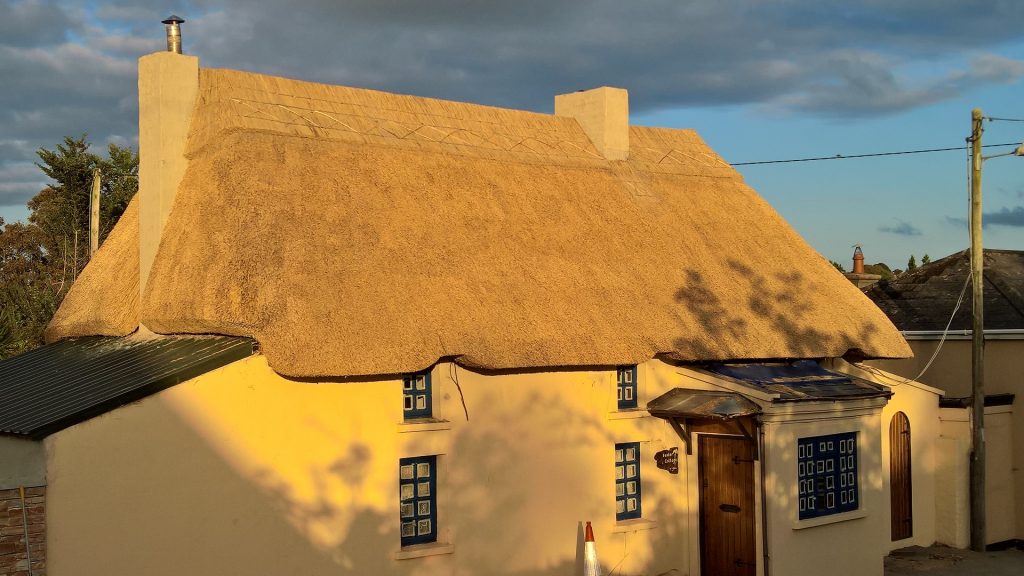
Other finishes sit around those three. Some eastern roofs, Wexford among them, carried timber ridge boards. On rope-thatched roofs along the Atlantic coast, including Donegal, the ridge is often a wide, low roll suited to a low pitch, with the ropes or the netting doing as much work as the straw. A Donegal flax roof is noted for that wide ridge. The pitch gives you very little height to hide a mistake, so each handful has to be set carefully.
Decoration, where it exists, is usually restrained. Rows of stretchers, a lattice, a herringbone or a simple diamond in hazel are the old vocabulary. More elaborate cuts are often a thatcher’s signature rather than a county style. In a district you can sometimes tell who thatched a roof by the ridge alone.
If you own a thatched roof, look at what is there now, and at what was usual in that county, before anyone offers a new pattern. A flush wrap-over, a bobbin ridge and a cut block are three different jobs. Only one of them may belong on that building. Learning to set them out and finish them takes time on the roof, not a short demonstration. Nothing in this part of the work comes easy.
Thatching Tools Online in Ireland. Browse our range of roof thatching tools and materials.
Thatching Tools Online in Ireland. Browse our range of roof thatching tools and materials.
Looking for a new career? Or want to move your thatching skills on to new horizons? Check out the current job opportunities with Thatching Ireland.
Click edit button to change this text. Lorem ipsum dolor sit amet, consectetur adipiscing elit